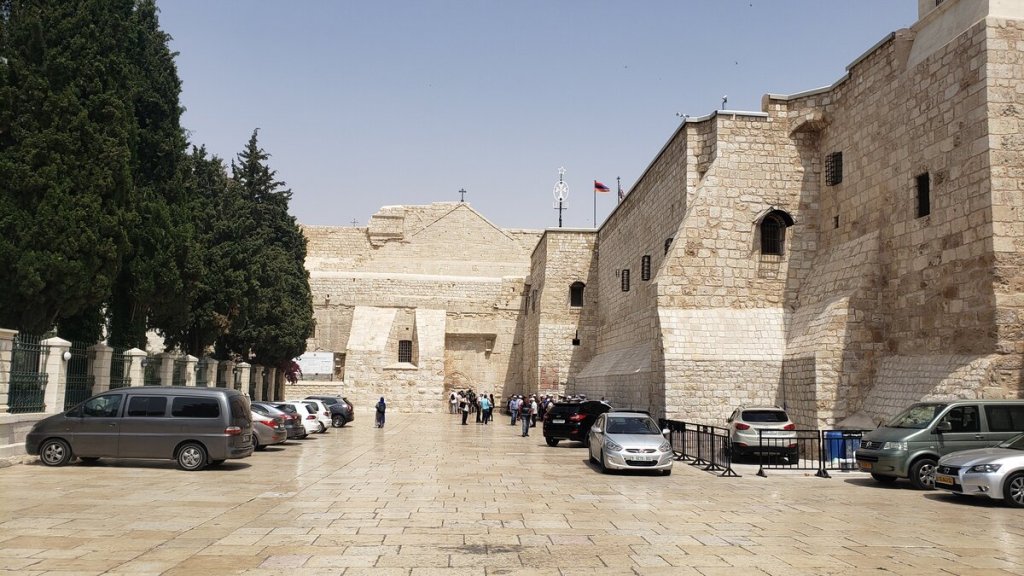
Introduction to Church of the Nativity: The Church of the Nativity, or Basilica of the Nativity, is a basilica located in Bethlehem in the West Bank. It holds a prominent religious significance to Christians of various denominations as the birthplace of Jesus. The inscribed property is situated 10 km south of Jerusalem on the site identified by Christian tradition as the birthplace of Jesus since the 2nd century.
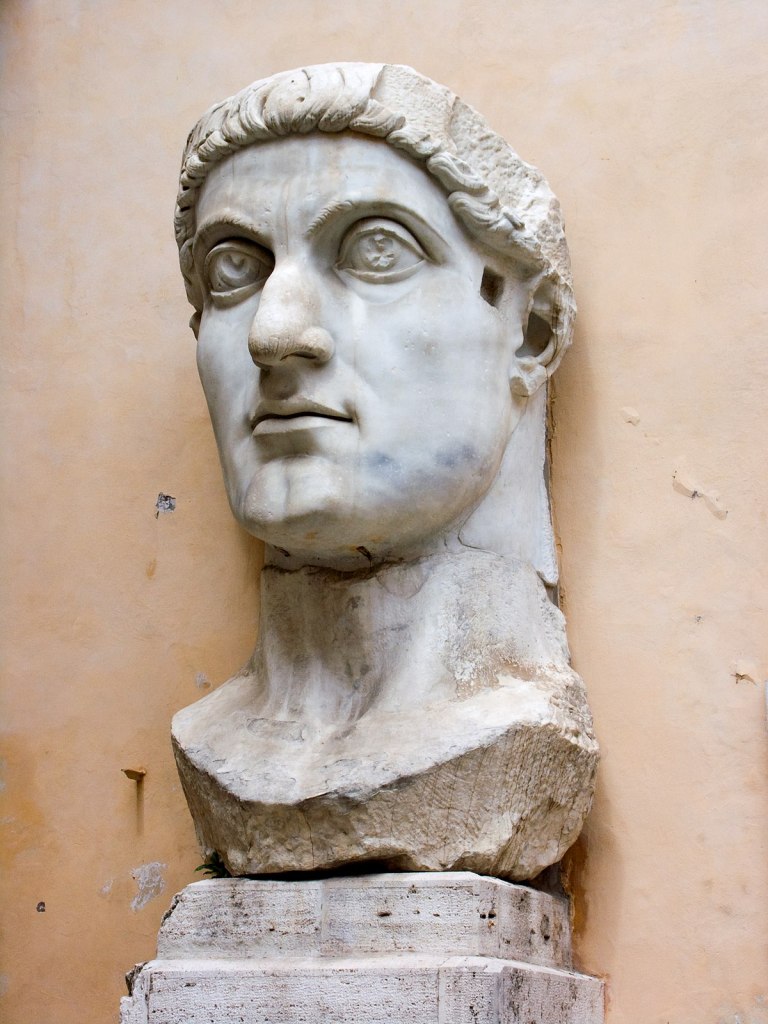
The church was originally commissioned by Constantine the Great. He made it within a short time after his mother Helena’s visit to Jerusalem and Bethlehem in 325–326. That original basilica was likely built between 330–333. It was being already mentioned in 333, and was dedicated on 31 May 339.
A church was first completed there in ad 339. It was destroyed by fire during the Samaritan revolts of the sixth century, possibly in 529. The structure that replaced it after a fire in the 6th century retains elaborate floor mosaics from the original building. A new basilica was built a number of years later by Byzantine Emperor Justinian. He added a porch or narthex, and replaced the octagonal sanctuary with a cruciform transept complete with three apses. But he largely preserved the original character of the building with an atrium and a basilica consisting of a nave with four side aisles.
Since 2012, the Church of the Nativity is a World Heritage Site and was the first to be listed by UNESCO under ‘Palestine’. A 250-year-old understanding among religious communities, the Status Quo, applies to the site. The church of Nativity and the Pilgrimage Route, Bethlehem have outstanding universal value. Because this church is related to the birthplace of the best prophet of Islam and the most important person in Christianity. According to Christian believers, the Son of God was born in Bethlehem.
History of Church of the Nativity: The holy site known as the Nativity Grotto is thought to be the cave in which Jesus was born. Since at least the 2nd century AD people have believed that the place where the Church of the Nativity, Bethlehem, now stands is where Jesus was born.
In 135, Emperor Hadrian had the site above the Grotto converted into a worship place for Adonis, the mortal lover of Aphrodite, the Greek goddess of beauty and desire. A Latin Priest, Jerome noted in 420 that the grotto had been consecrated to the worship of Adonis. Many think that, At that time sacred grove was planted there in order to completely wipe out the memory of Jesus from the world.
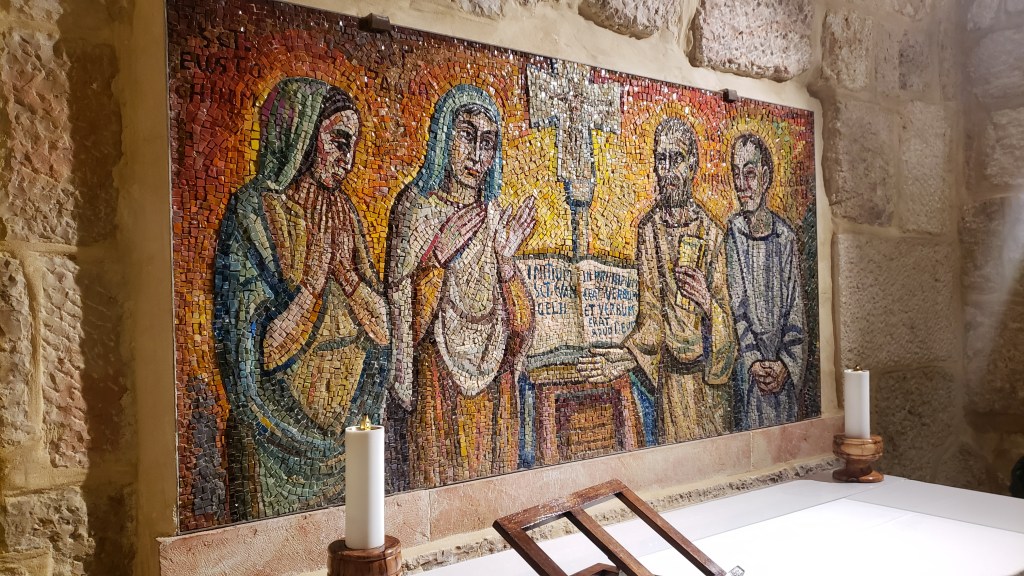
Some modern scholars dispute this argument and insist that the cult of Adonis-Tammuz originated the shrine and that it was the Christians who took it over. The Christians substituting it with the worship of Jesus. The first basilica on this site was built by Emperor Constantine I. The construction started in 326 under the supervision of Bishop Makarios, who followed Constantine’s orders, and was dedicated on 31 May 339 .
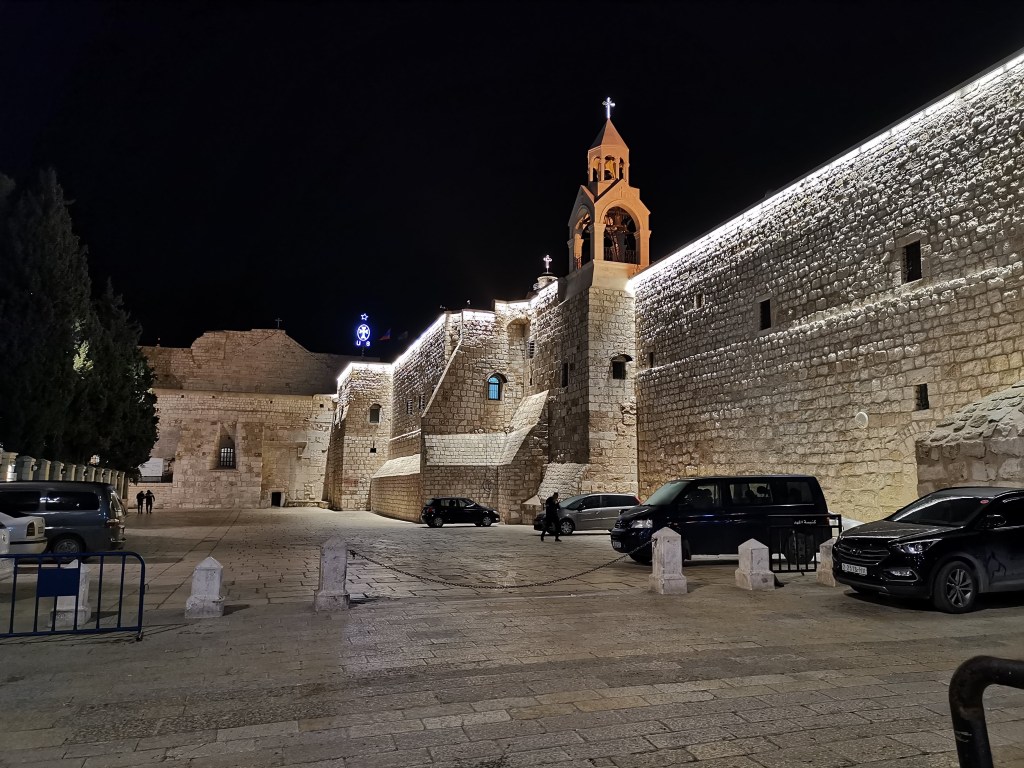
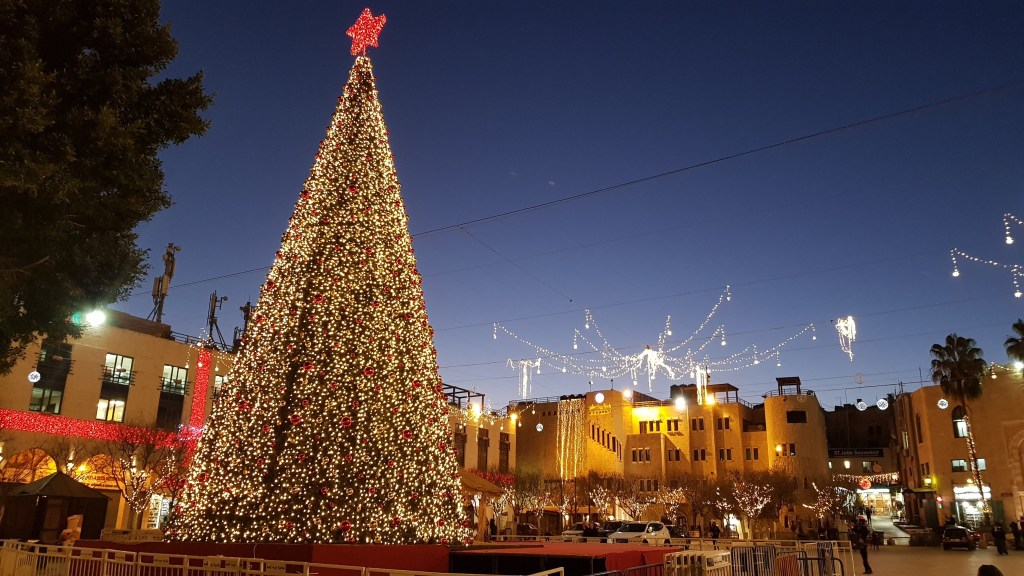
Night view at Church of Nativity 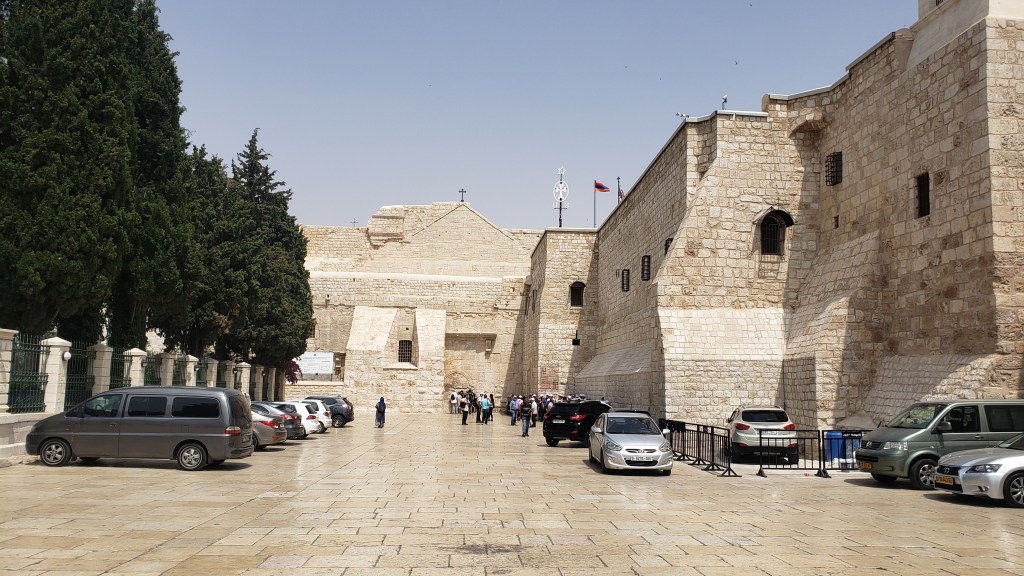
Day view at Church of Nativity
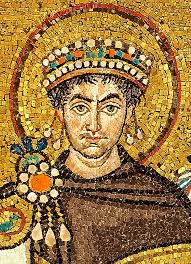
Construction of this early church was carried out as part of a larger project following the First Council of Nicaea during Constantine’s reign. It was aimed to build churches on the sites assumed at the time to have witnessed the crucial events in the life of Jesus. The basilica was rebuilt in its present form in the 6th century by Byzantine Emperor Justinian I (527-565), after the destruction of either 529 or 556. At that time The Persians under Khosrau II invaded Palestine and conquered nearby Jerusalem in 614, but they did not destroy the structure. According to legend, the Persian general ordered that the building should not be defended.
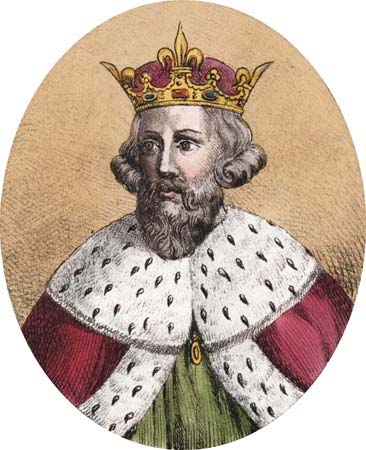
Anglo-Saxon king Alfred the Great (r. 886-899) is credited with a donation for the upkeep of the church. The Church of the Nativity was used as the primary coronation church for Crusader kings, from the second ruler of the Latin Kingdom of Jerusalem in 1100 and until 1131. The Crusaders undertook extensive decoration and restoration on the basilica and grounds. They did a process that continued until 1169.
The Khwarezmian Turks vandalized the Church of the Nativity in April 1244, leaving the roof in poor condition. The Duchy of Burgundy committed resources to restore the roof in August 1448. And multiple regions contributed supplies to have the Church roof repaired in 1480. In that repair work, England supplied the lead, the Second Kingdom of Burgundy supplied the wood, and the Republic of Venice provided the labor.
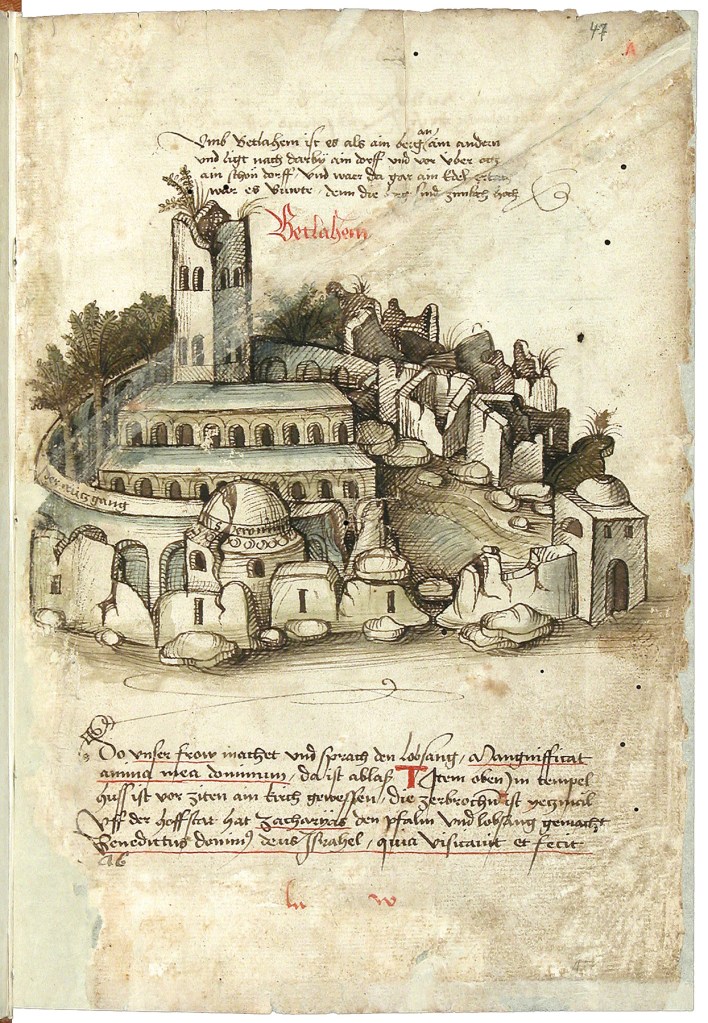
In the late 18th century Abbé Giovanni Mariti sees the church walls stripped of their marble surface. She blamed it on the sultan of Egypt who had used it to decorate his palace at Grand Cairo. And she also mentioned that the iron pieces which had held the marble slabs in place were still visible.
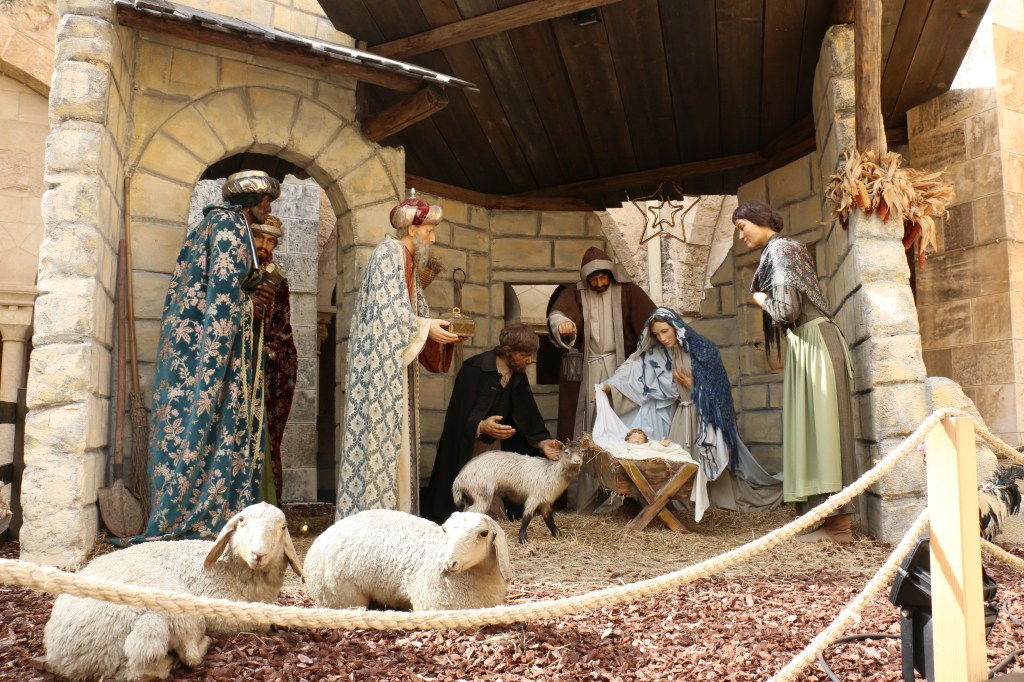
Earthquakes inflicted significant damage to the Church of the Nativity between 1834 and 1837. The 1834 Jerusalem earthquake damaged the church’s bell tower, the furnishings of the cave on which the church is built, and other parts of its structure. Minor damages were further inflicted by a series of strong aftershocks in 1836 and the Galilee earthquake of 1837.
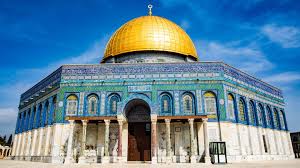
As part of the repairs executed by the Greek Orthodox after receiving a firman in 1842, a wall was built between the nave and aisles. It was used at the time as a market, and the eastern part of the church containing the choir, which allowed for worship to be continued there. By 1846, the Church of the Nativity and its surrounding site lay in poor condition and vulnerable to looting. Much of the interior marble flooring was looted in the early half of the 19th century. Much of which was transferred to use in other buildings around the region, including the Haram ash-Sharif (Temple Mount) in Jerusalem.
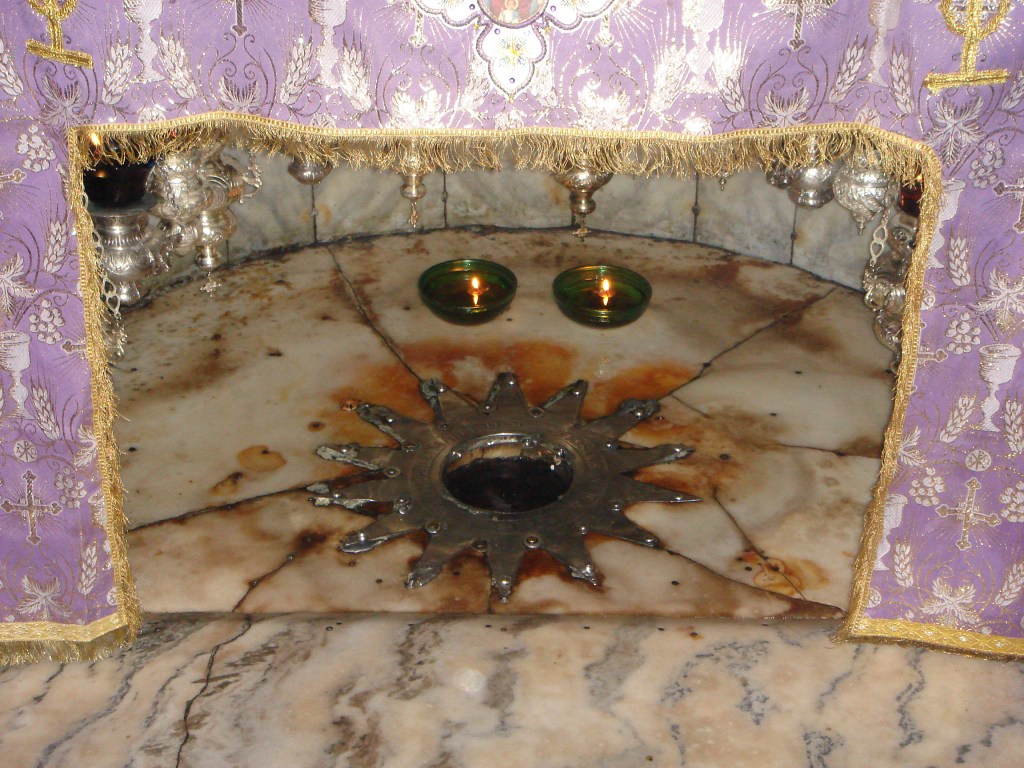
The religiously significant silver star marking the exact birthplace of Jesus was stolen in October 1847 from the Grotto of the Nativity. The 14-pointed silver star with the Latin inscription Hic De Virgine Maria Jesus Christus Natus Est-1717 (“Here Jesus Christ was born to the Virgin Mary”-1717) significant in that area. It was installed by the Catholics in 1717. The Greeks allegedly removed in 1847 but in 1853 it was replaced by the Turkish government.
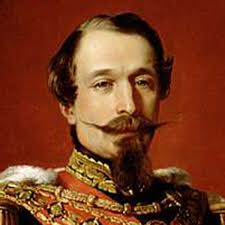
The church was under the control of the Ottoman Empire, but around Christmas 1852, Napoleon III forced the Ottomans to recognise France as the “sovereign authority” over Christian holy sites in the Holy Land. The Sultan of Turkey replaced the silver star at the Grotto, complete with a Latin inscription, but the Russian Empire disputed the change in authority. They cited the Treaty of Küçük Kaynarca and then deployed armies to the Danube area.
As a result, the Ottomans issued firmans essentially reversing their earlier decision, renouncing the French treaty, and restoring the Greeks to the sovereign authority over the churches of the Holy Land. This fuelled the conflict between the Russian and the Ottoman empires over the control of holy sites around the region.
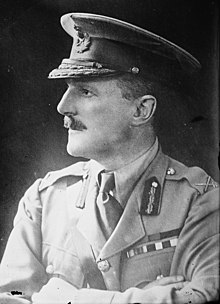
In 1918 British governor, Colonel Ronald Storrs, demolished the wall erected in 1842 by the Greek Orthodox between nave and choir. The passageway which connects St. Jerome’s Cave and the Cave of the Nativity was expanded in February 1964, allowing easier access for visitors. The Church of the Nativity, while remaining basically unchanged since the Justinianic reconstruction. It has seen numerous repairs and additions. Especially from the Crusader period, such as two bell towers (now gone), wall mosaics and paintings (partially preserved). Over the centuries, the surrounding compound has been expanded.
Today it covers approximately 12,000 square meters, comprising three different monasteries: one Greek Orthodox, one Armenian Apostolic, and one Roman Catholic. First two of those three contain bell towers built during the modern era.
The silver star marking the spot where Christ was born, inscribed in Latin, was stolen in October 1847 by Greek monks who wished to remove this Catholic item. Some proclaim that this was a contributing factor in the Crimean War against the Russian Empire. Others proclaim that the war grew out of the wider European situation.
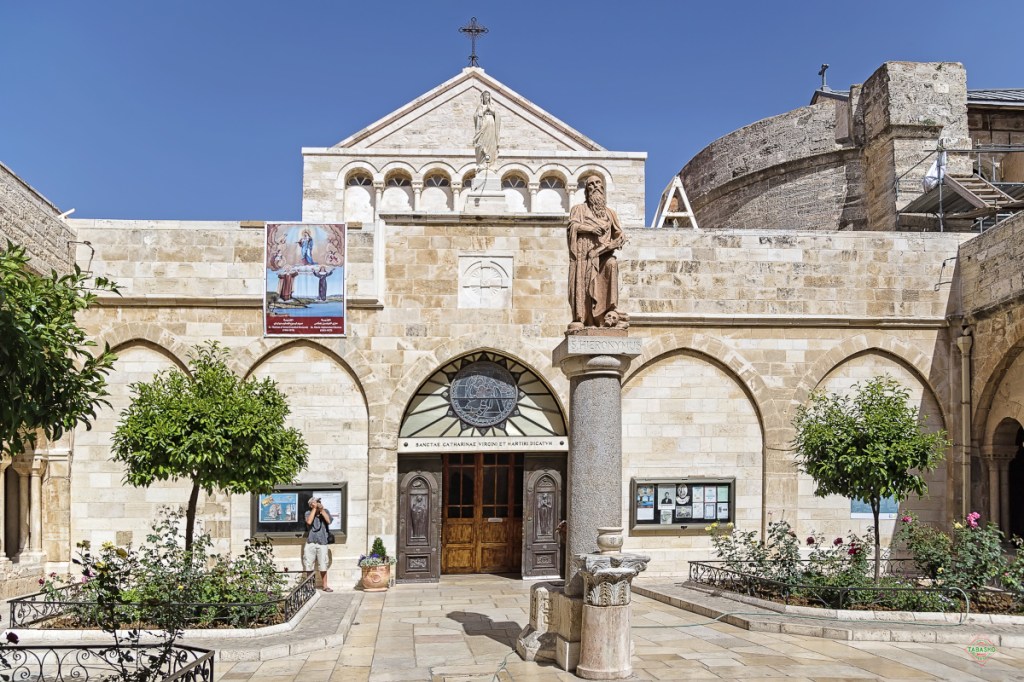
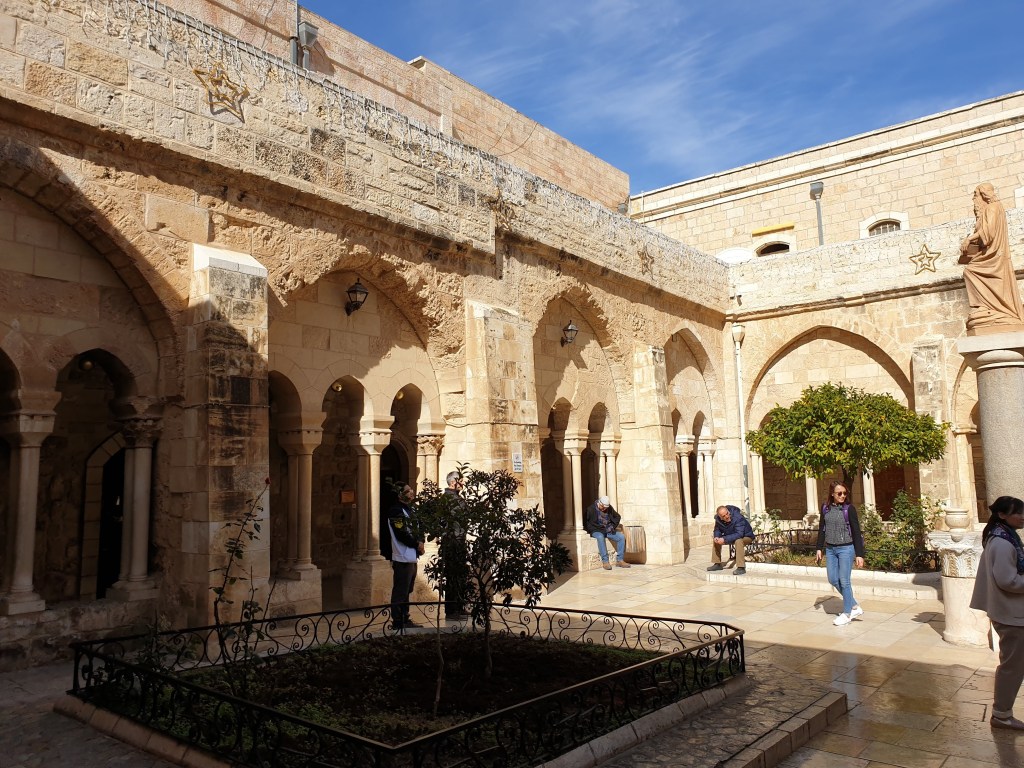
The site structure of Church of the Nativity: The centerpiece of the Nativity complex is the Grotto of the Nativity. It is a cave which preserves the site where Jesus is said to have been born.The core of the complex connected to the Grotto consists of the Church of the Nativity itself. And the adjoining is Roman Catholic Church of St. Catherine north of it.Outer courtyard is the Bethlehem’s main city square, Manger Square, is an extension of the large paved courtyard in front of the Church of the Nativity and St Catherine’s. Here crowds gather on Christmas Eve to sing Christmas carols in anticipation of the midnight services.
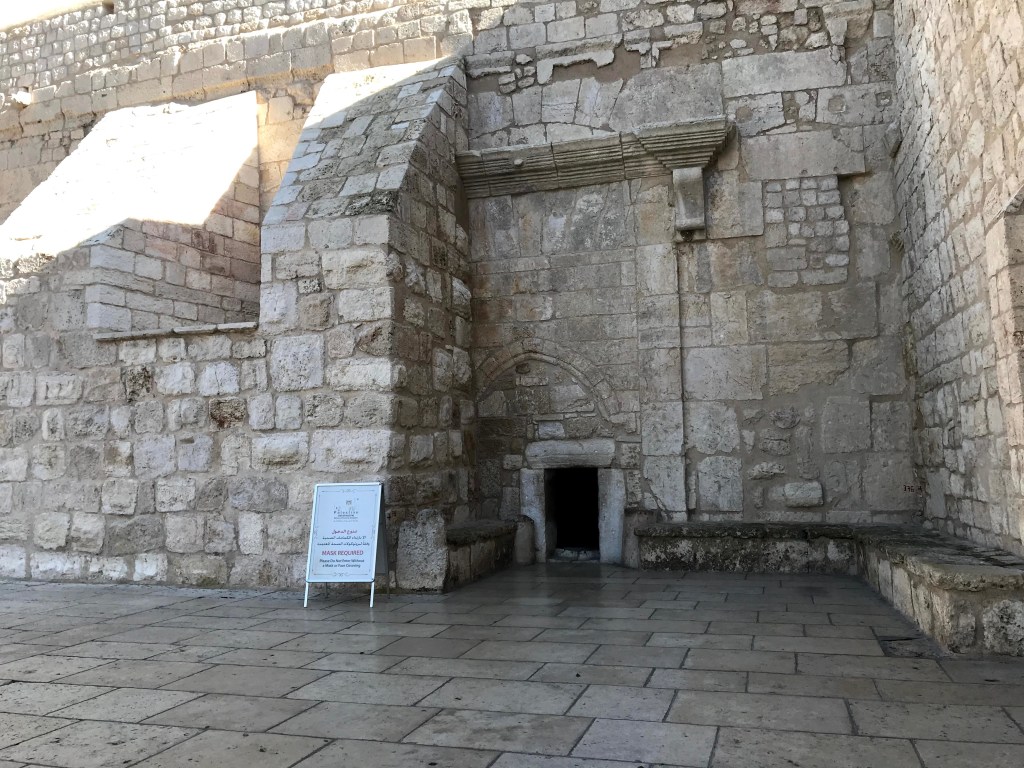
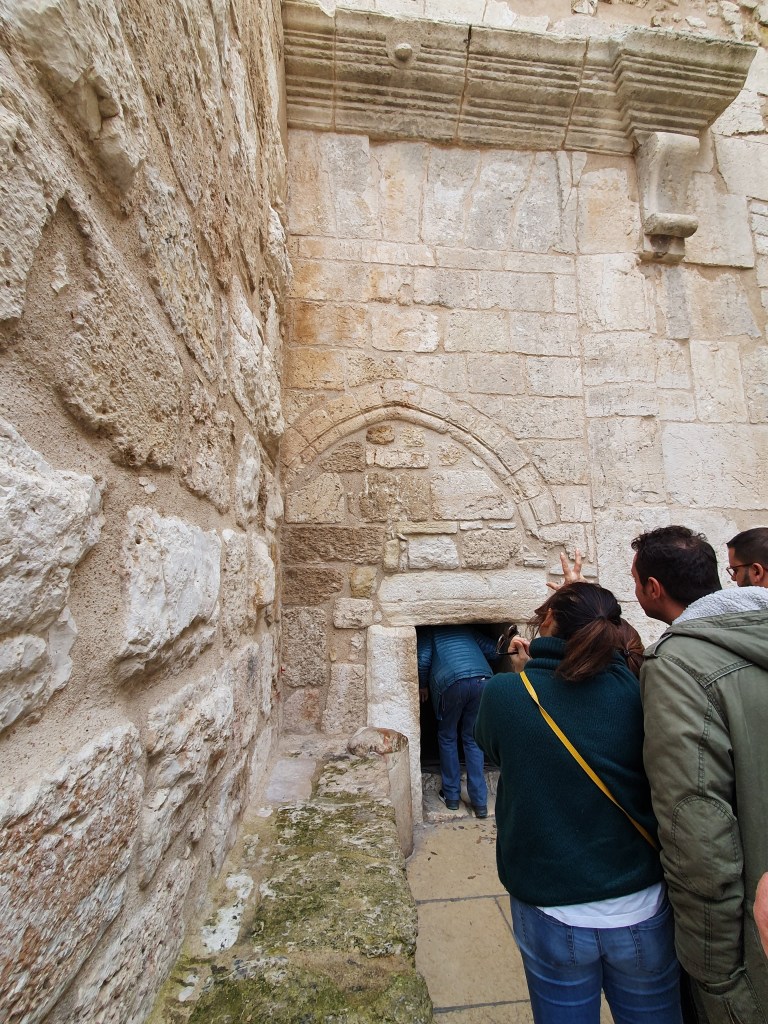
A visitor need to go inside through this small cave called “Door of Humility”
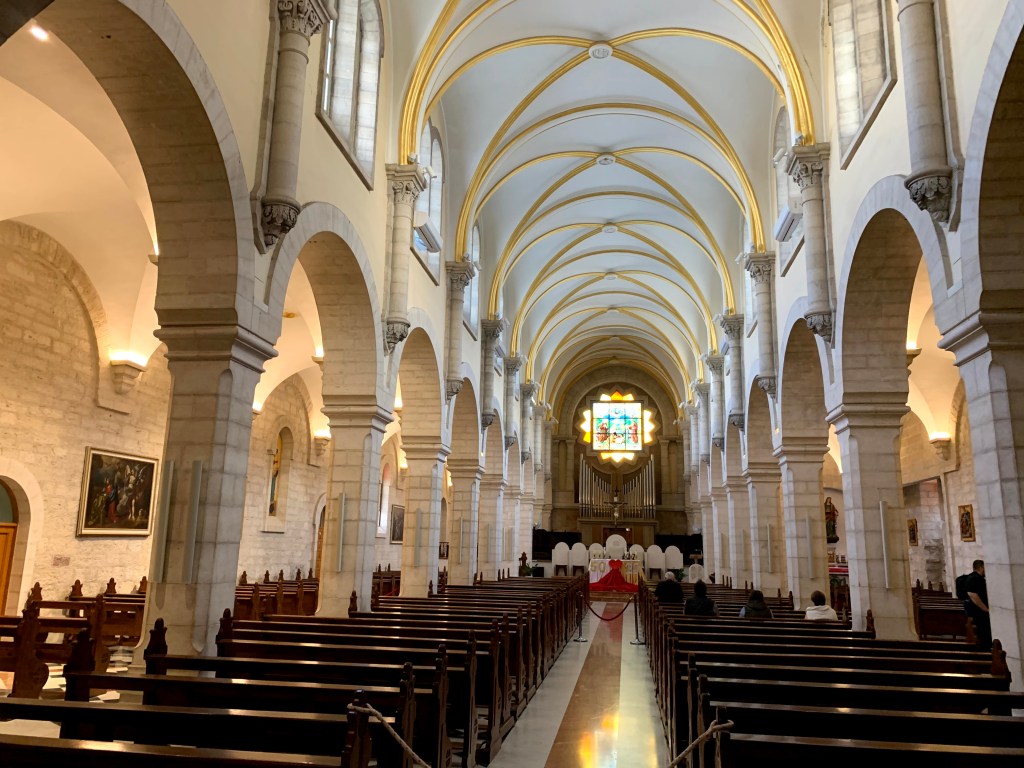
The main Basilica of the Nativity is maintained by the Greek Orthodox Patriarchate of Jerusalem. It is designed like a typical Roman basilica, with five aisles formed by Corinthian columns, and an apse in the eastern end containing the sanctuary. The basilica is entered through a very low door called the “Door of Humility. The church’s interior walls feature medieval golden mosaics once covering the side walls, which are now in large parts lost. The original Roman-style floor of the basilica has been covered over with flagstones. But there is a trap door in the floor which opens up to reveal a portion of the original mosaic pavement from the Constantinian basilica.
There are 44 columns separating the aisles from each other and from the nave. Some of which are painted with images of saints, such as the Irish monk St. Cathal (fl. 7th century), the patron of the Sicilian Normans, St. Canute (c. 1042–1086), king of Denmark, and St. Olaf (995–1030), king of Norway.
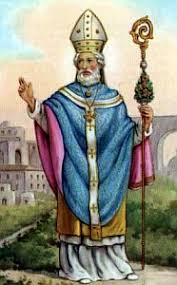
St. Cathal 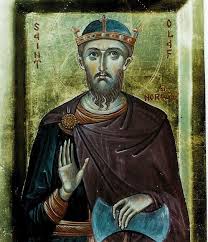
St. Olaf (995–1030) 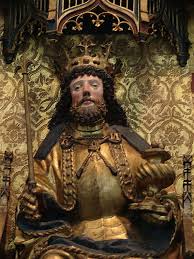
St. Canute (c. 1042–1086)
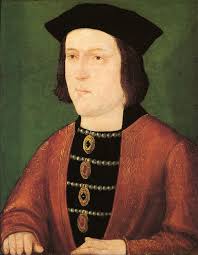
The east end of the church consists of a raised chancel, closed by an apse containing the main altar and separated from the chancel by a large gilded iconostasis or religious paintings. A complex array of sanctuary lamps is placed throughout the entire building. The open ceiling exposes the wooden rafters which are recently restored.
The previous 15th-century restoration used beams donated by King Edward IV of England. He donated lead to cover the roof. However, this lead was taken by the Ottoman Turks, who melted it down for ammunition to use in war against Venice. Stairways on either side of the chancel lead down to the Grotto.
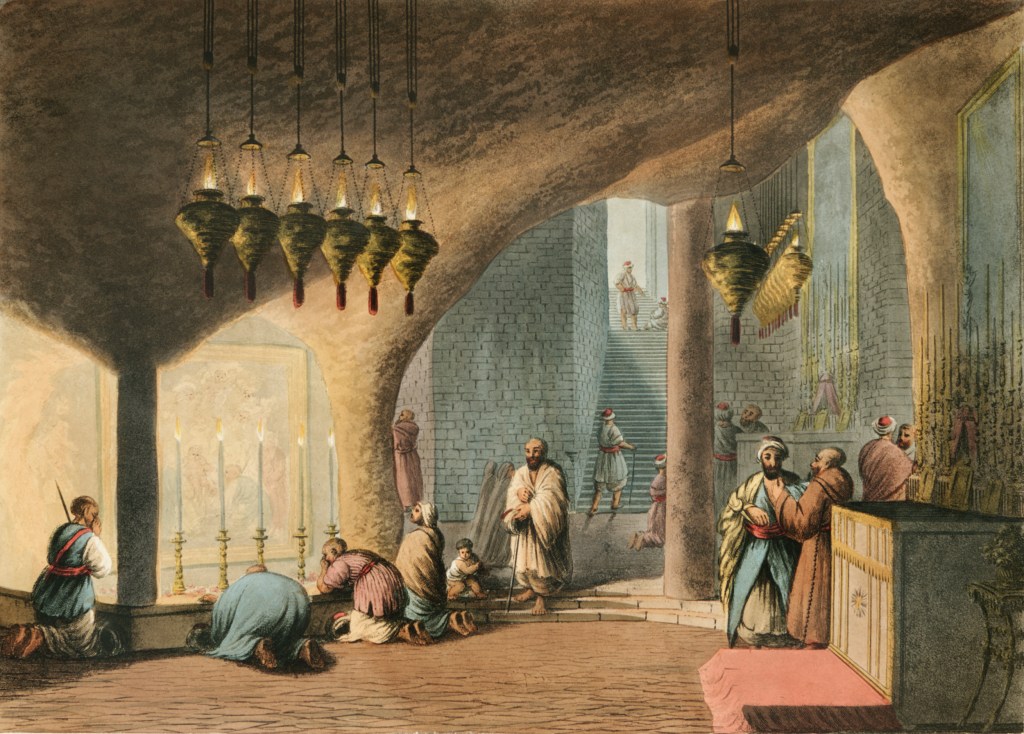
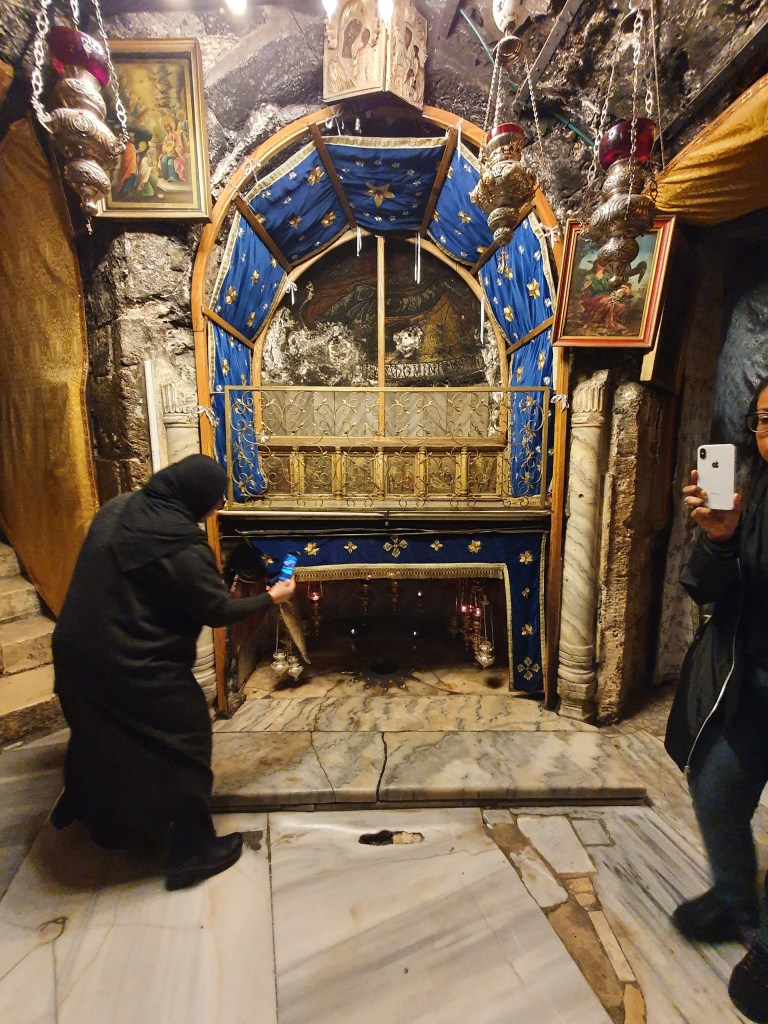
GROTTO OF THE NATIVITY: The Grotto of the Nativity is an underground space where normally accessed by two staircases on either side of the chancel. The Grotto is part of a network of caves, which are accessed from the adjacent Church St Catherine’s. The tunnel-like corridor connecting the Grotto to the other caves is normally locked. The Altar of the Nativity is maintained by the Greek Orthodox and Armenian Apostolic churches.
The significance of the 14 points on the star is to represent the three sets of 14 generations in the genealogy of Jesus Christ. First 14 from Abraham to David, then 14 from David to the Babylonian captivity, Then 14 more to Jesus Christ. In the middle of the 14 pointed star is a circular hole, through which one can reach in to touch the stone. Many assume that, it is the original stone that Mary laid on when she gave birth to Jesus.
Roman Catholics are in charge of a section of the Grotto known as the “Grotto of the Manger”. The Altar of the Magi is located directly opposite from the manger site.
CHURCH OF ST. CATHERINE: St. Catherine is an adjoining Church of Grotto Of The Nativity. It is a Roman Catholic church. It is dedicated to St. Catherine of Alexandria. It was built in a more modern Gothic Revival style. This is the church where the Latin Patriarch of Jerusalem celebrates Midnight Mass on Christmas Eve. According to a tradition, the tombs of four Catholic saints are said to be located beneath the Church of the Nativity. But it is not not sustained by history.
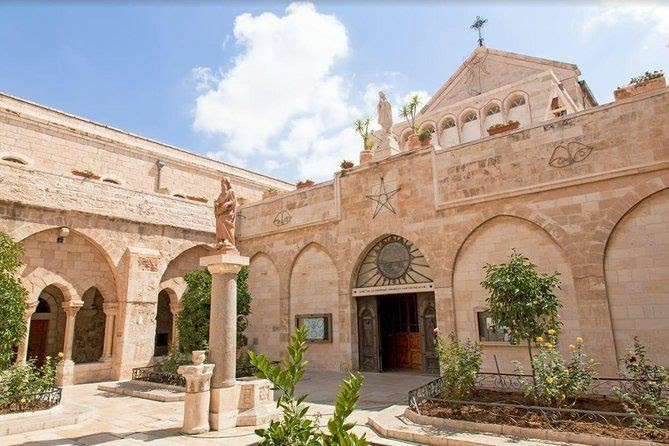
How to go at Church of the Nativity: The church is close to the centre of Bethlehem, which is in the West Bank of Palestine. For that reason you can walk to Manger Square easily, which is where the Church of the Nativity is located. To visit the church if you’re not staying in Bethlehem, day trips are available.
You can book a tour that leaves from Tel Aviv or Jerusalem. Please note that bus stops in Bethlehem are located around 15 minutes’ walk away from the church. And there is some parking available nearby.
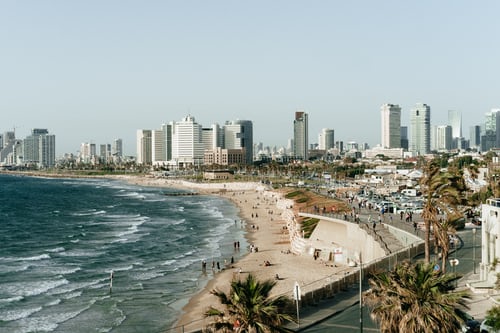
Tel Aviv 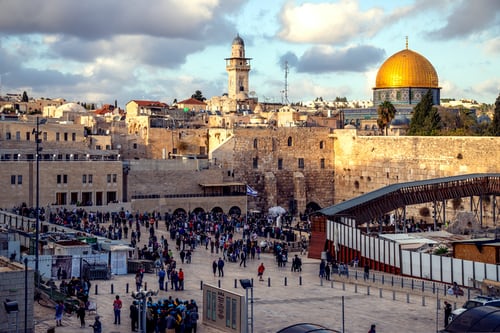
Jerusalem
To go from Jerusalem to the Church of the Nativity one tourist need to hire a car, it takes approximately 30 minutes to drive to Bethlehem. One may need to drive via the Hebron Road. A tourist shuttle bus can take you from Jerusalem to Bethlehem. There is one each day, at 3.30pm – it leaves. To return to Jerusalem it is at 5.30pm.
A public bus from the East Jerusalem Bus Station goes to Bethlehem. One tourist need to keep it mind that service is frequent. However, there is no official timetable for this bus. So tourists have to play it by ear if this is your chosen method of transport.
The journey usually takes around an hour, and costs USD 1.56.
Travel Cost and Travel time of Church of the Nativity: The church is open from 6.30am-7.30pm during the summer months. And 5.30am-6pm during the winter. The grotto itself is closed on Sunday mornings.
As it is a holy public place, one tourist does not need to pay fee to go inside the church.
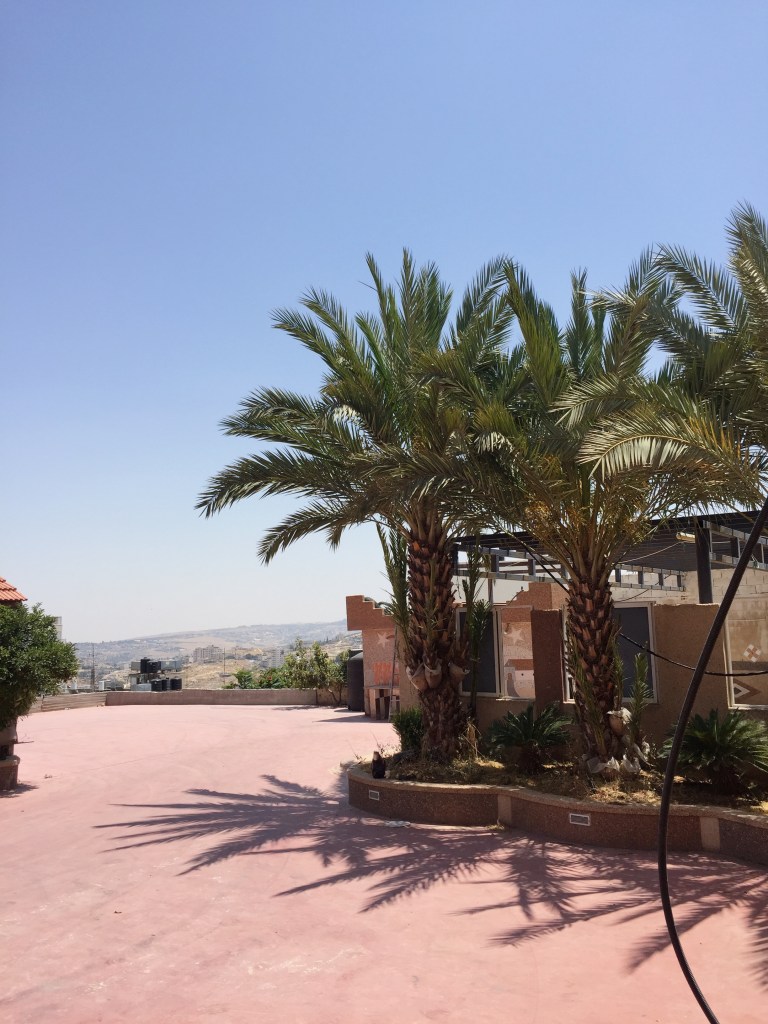
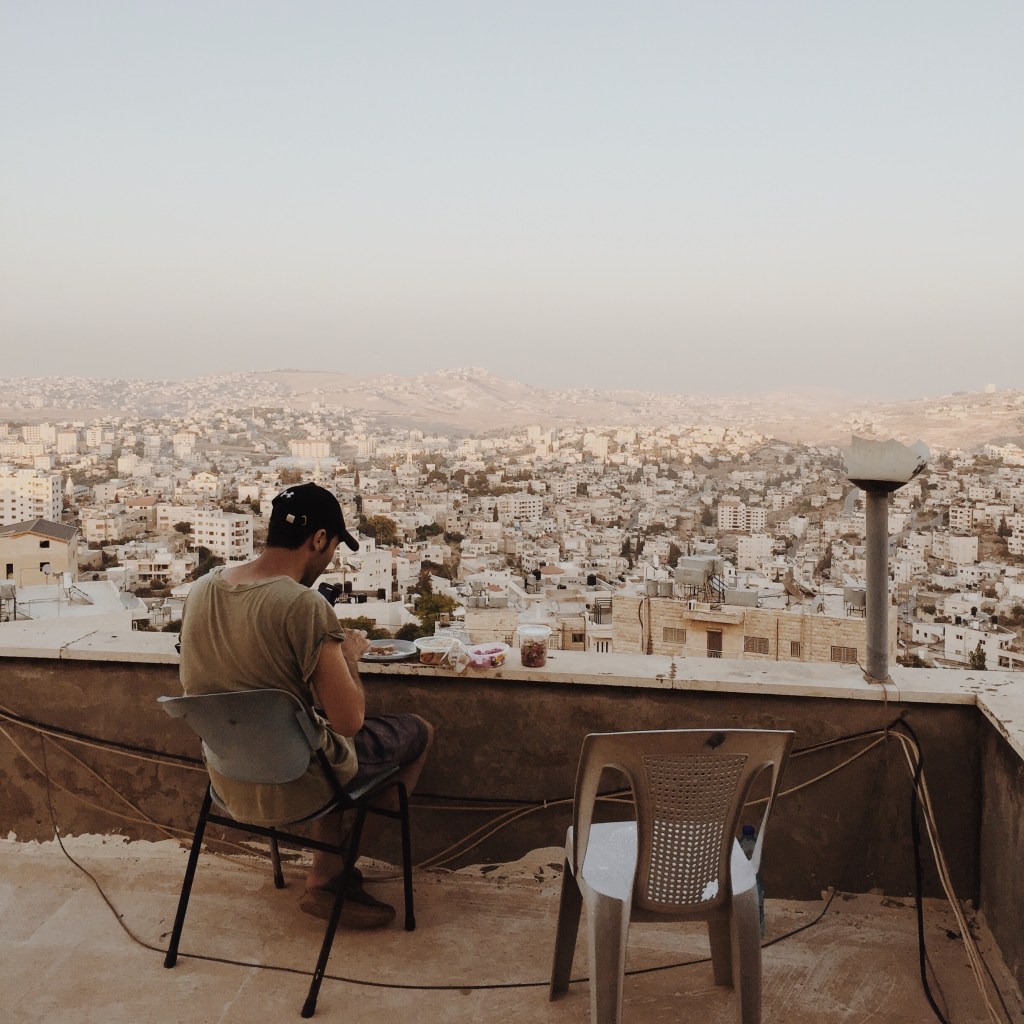
Where to stay at Church of the Nativity tour: The Habibi Hostel is the closest accommodation to the Church of the Nativity. It offers dormitories or double/twin rooms.There is free WiFi and free public parking as well as a pool, live music, movie nights, a shared kitchen and 24 hour check-in. Clean and spacious with great city views, the hostel is a three minute walk to the church.
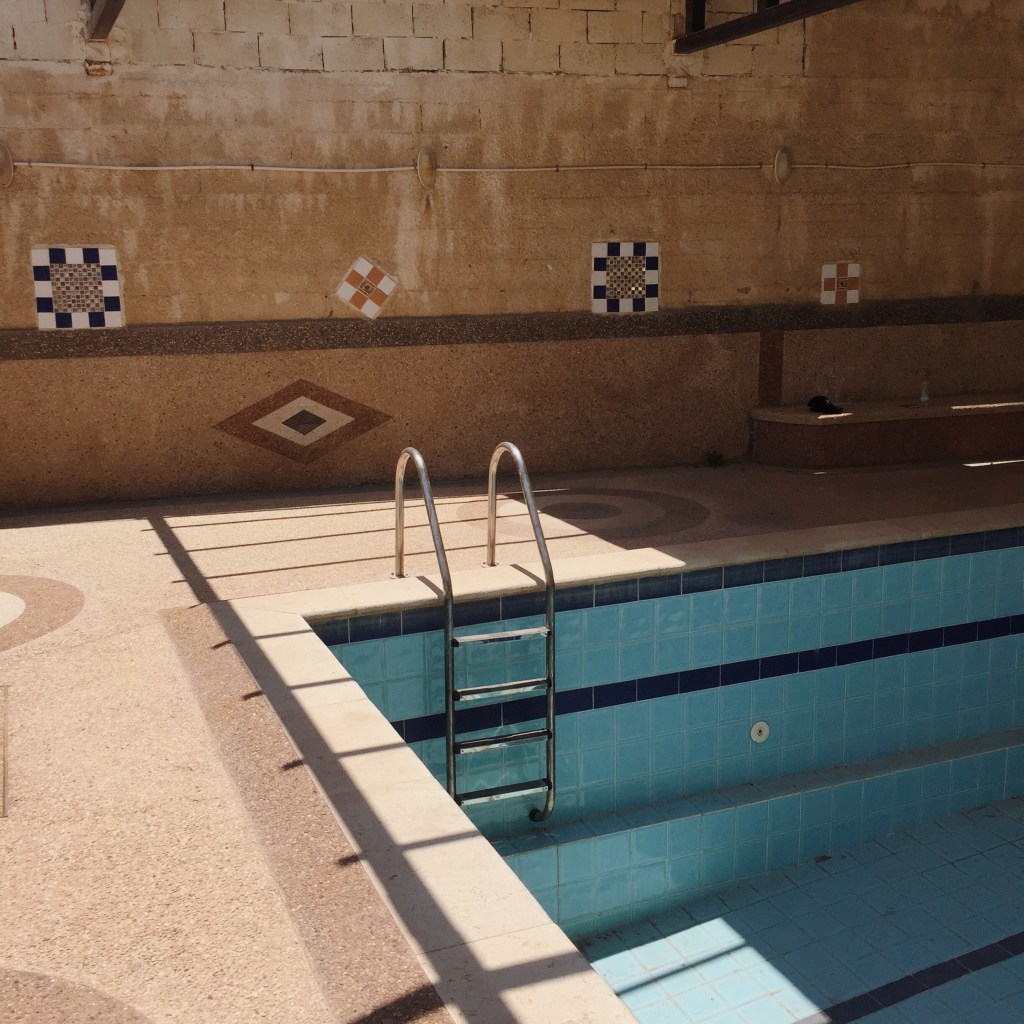
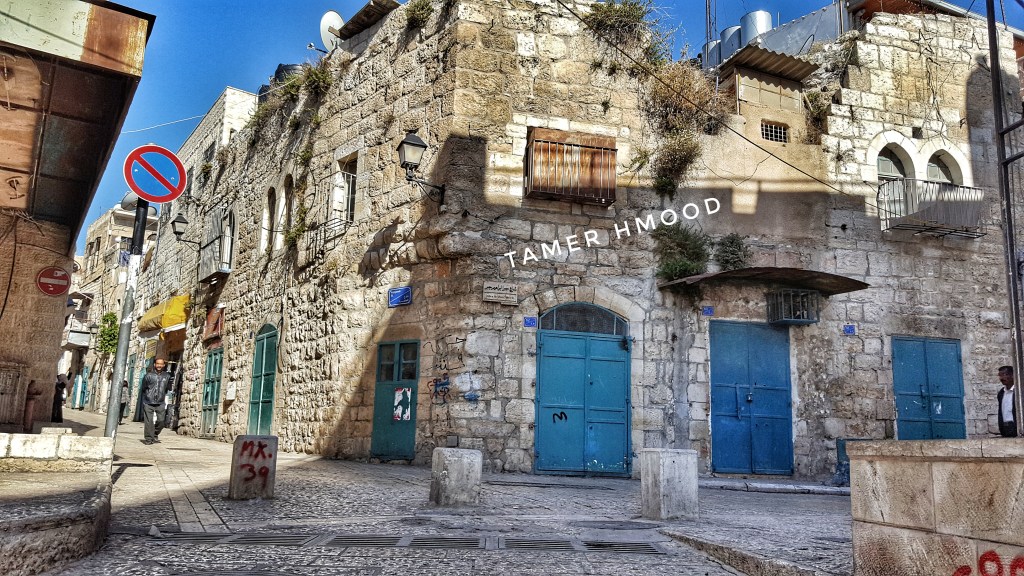
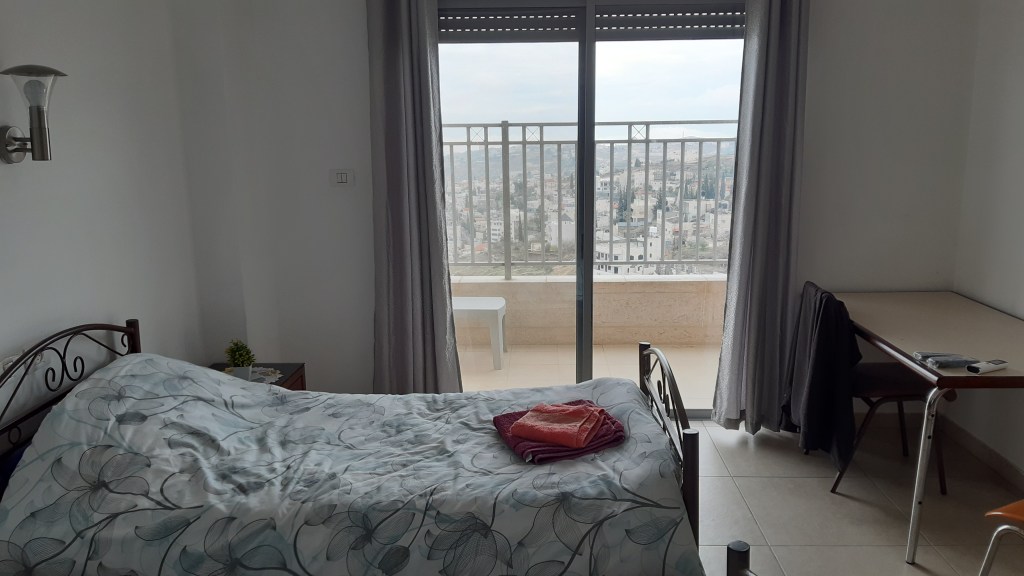
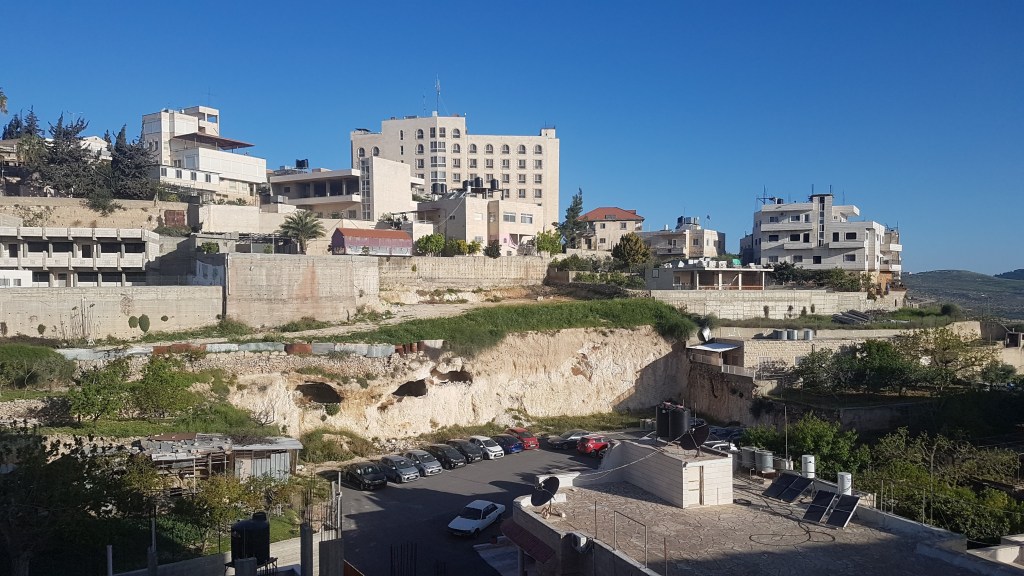
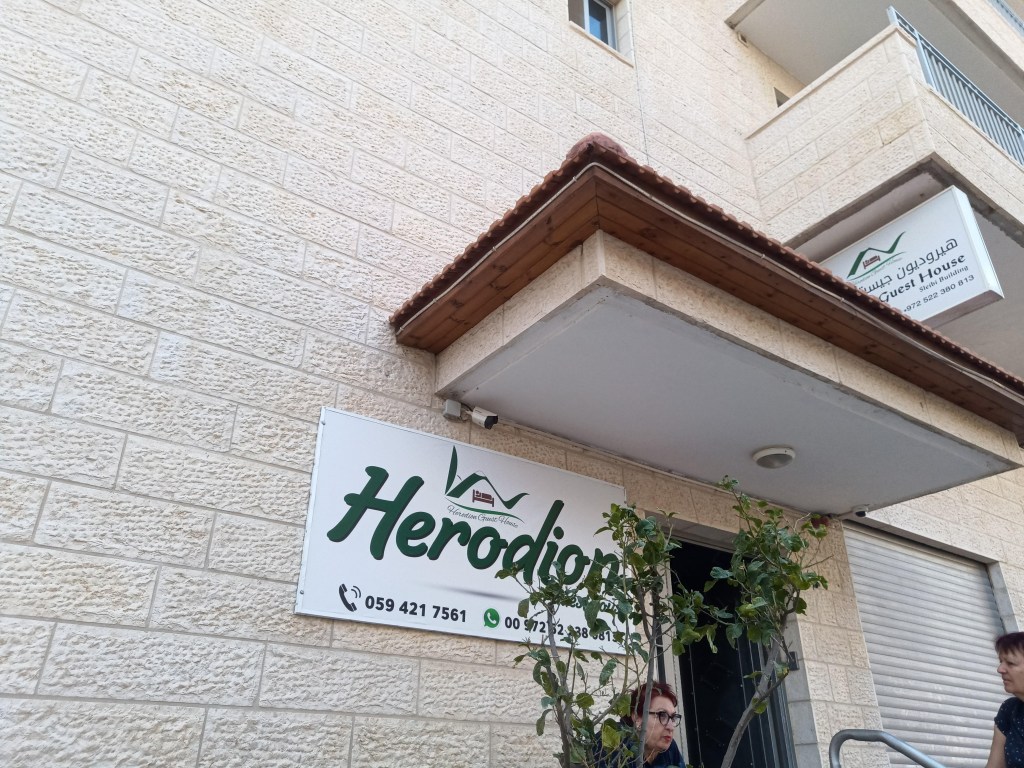
For those travelling on a mid-range budget there is The Herodian Guesthouse. This accommodation has private rooms – single rooms, family rooms, suites and more. There is free WiFi, free private parking, city and mountain views, air-conditioning and many other amenities. At only 800m from the Church of the Nativity, it also only takes a couple of minutes to walk there from this accommodation.

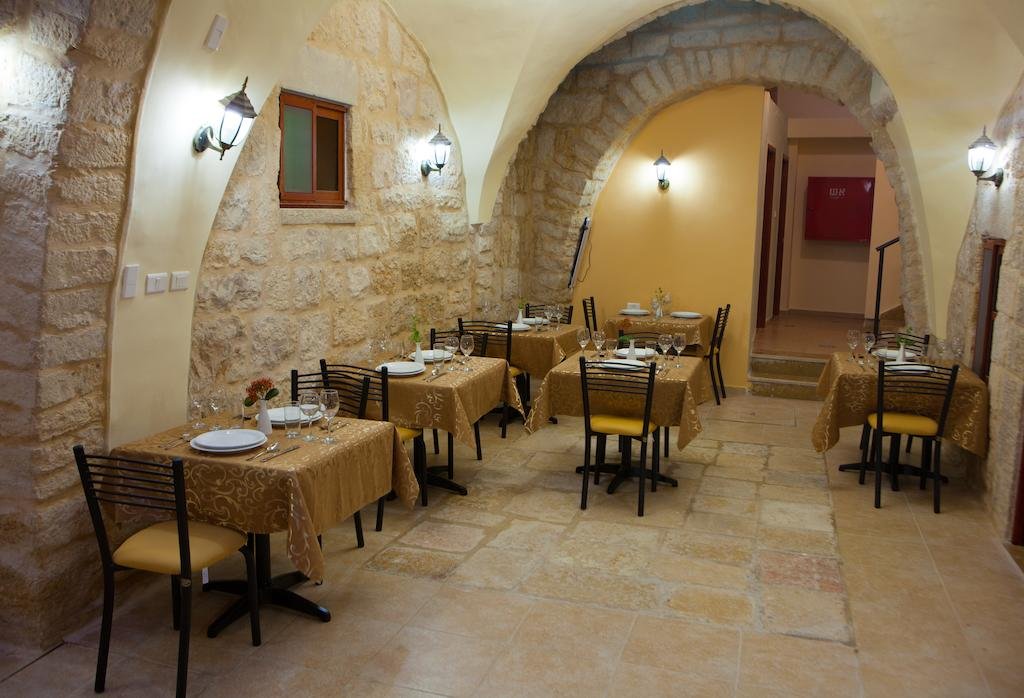
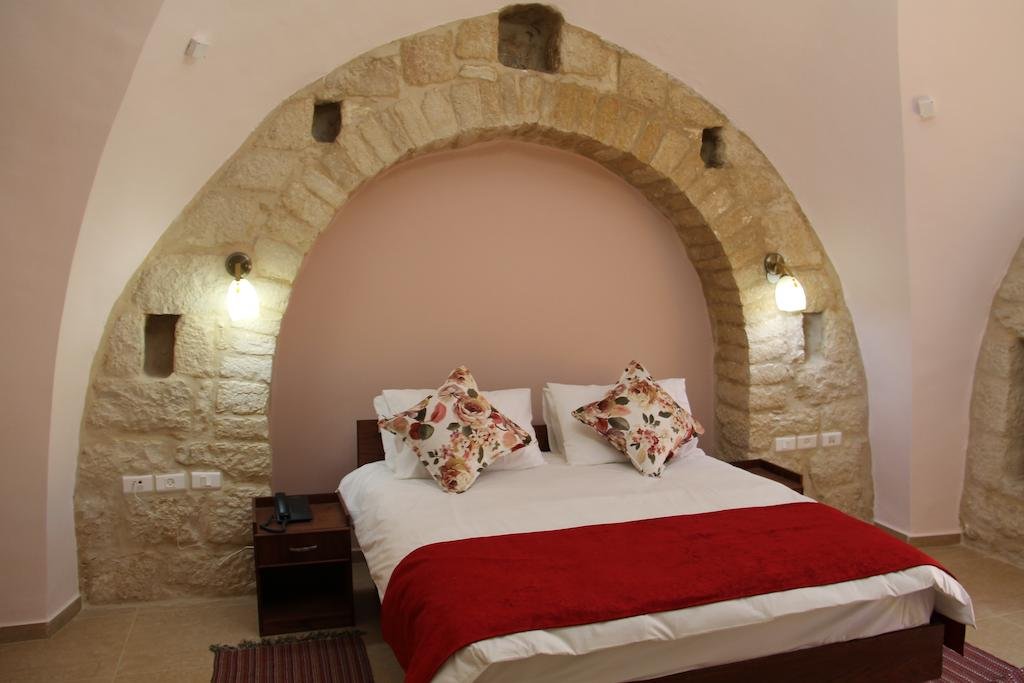
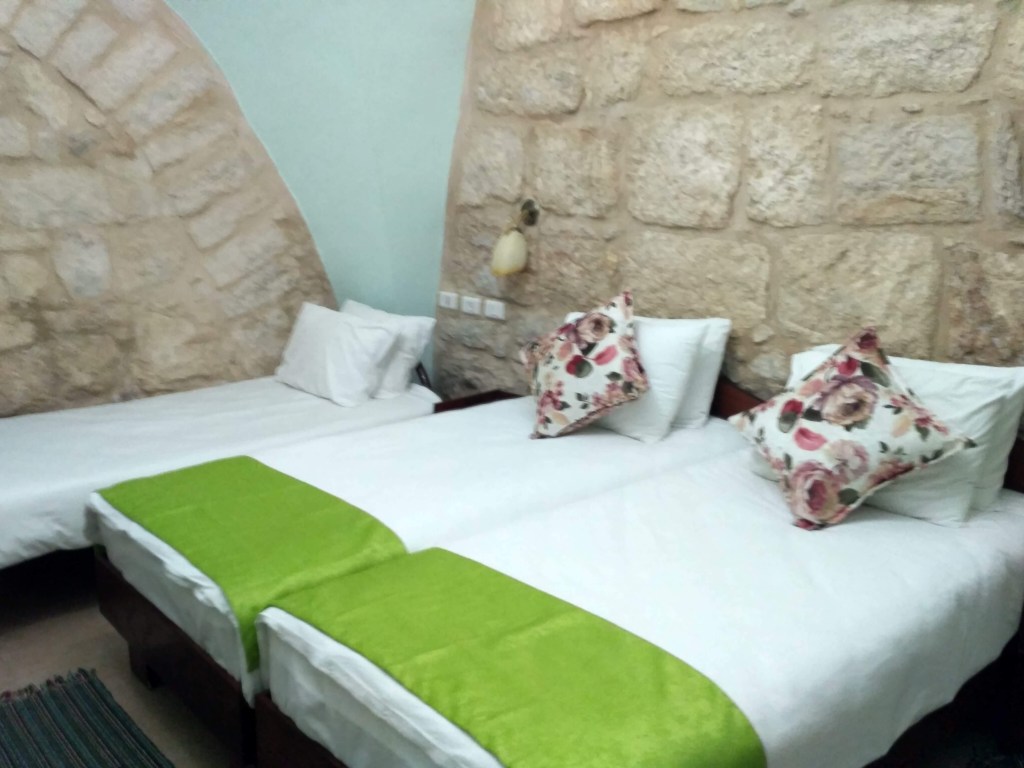
For something slightly unique, Dar Sitti Aziza is a guesthouse that has a traditional feel to it. With various sizes of private rooms, all with their own bathrooms and stunning exposed brick walls, it makes for a pleasant stay. There is free WiFi, a terrace, housekeeping, air-conditioning and more!
Food services at Church of the Nativity: As Church of the Nativity is an international tourist place, there are many restaurants near to it. Some well-known hotels are La Ventana Restaurant, Bonjour restaurant & café, Nirvana Family Restaurant, ASPARAGO Café & Restaurant, Kazachok Restaurant and terrace etc.
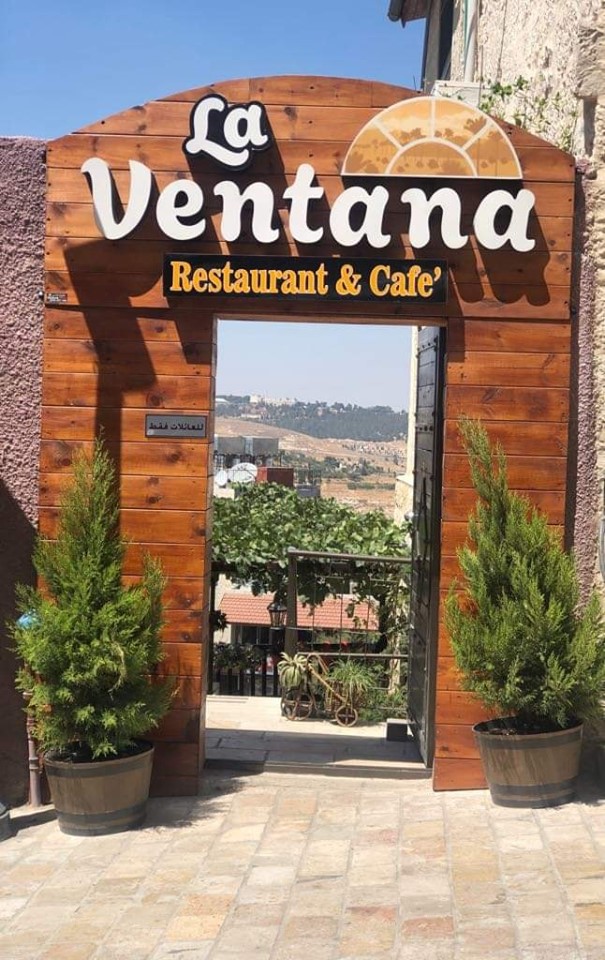
La Ventana Restaurant is 850 meters away from the church. It is very nice place with great views of Bethlehem. This restaurant serves good food. In this restaurant the prices are average, similar to other premises in the area. A tourist can find one cup of coffee from USD 3. A plate of humus and falafels (local foods) are USD 6. Dinner dishes can be find from USD 6 to USD 8.
Google map location of this restaurant is: https://goo.gl/maps/pVGCS8tq4yZLssDq5

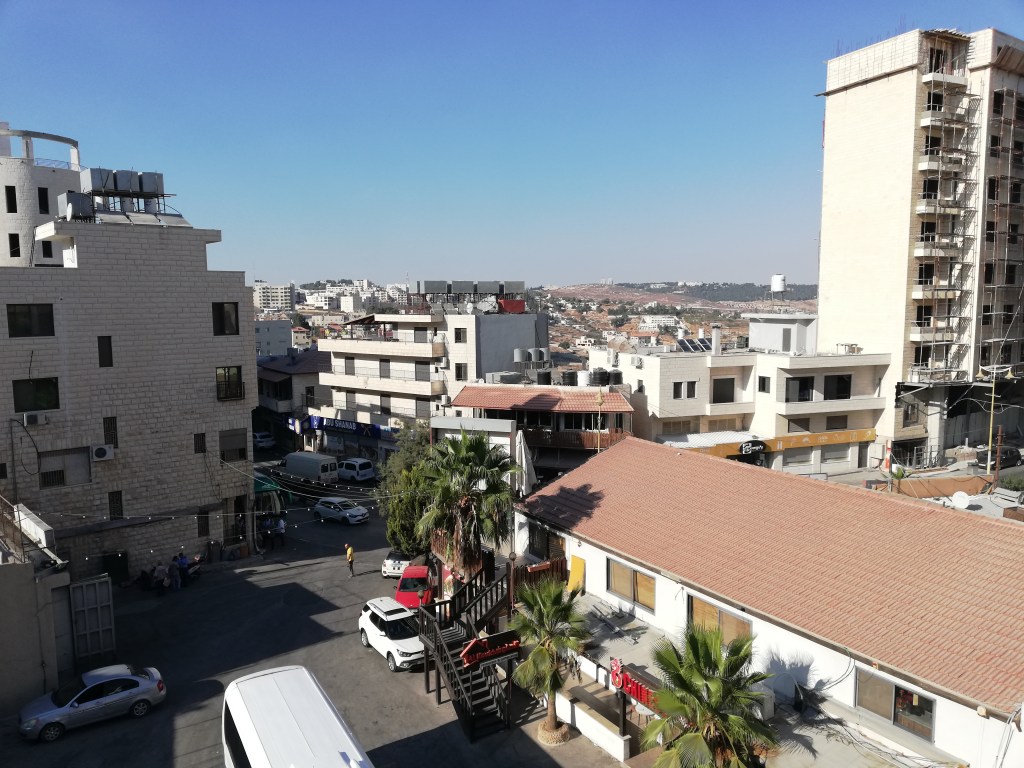
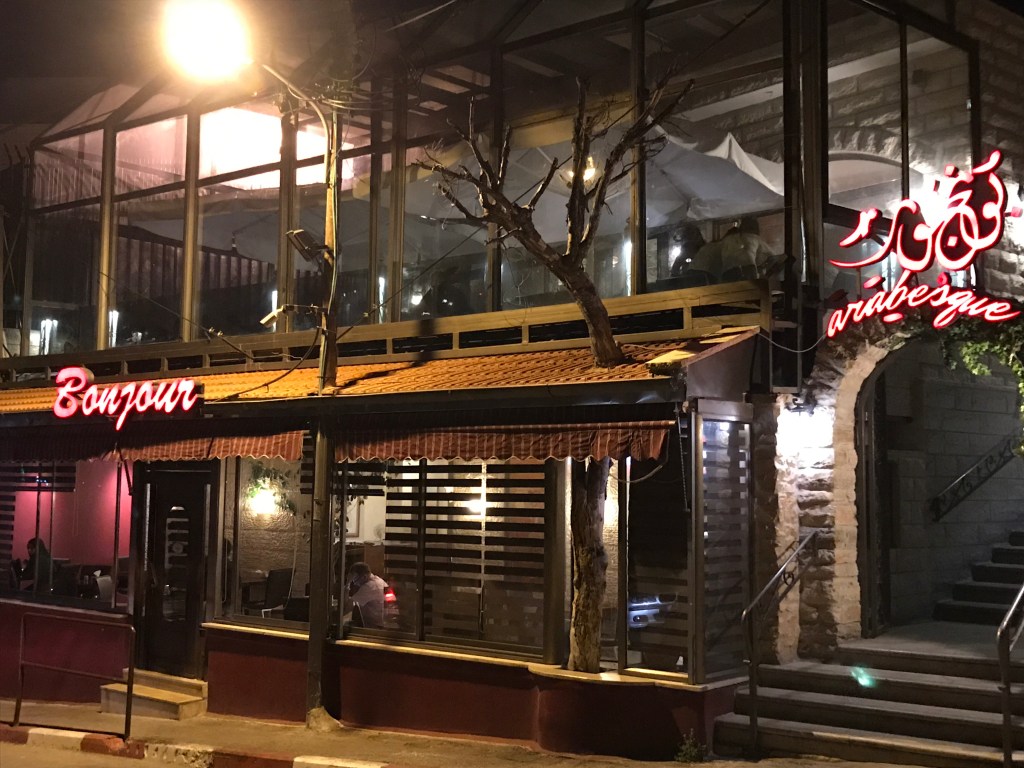
Bonjour restaurant & café is 1.6 kilometer away from the church. It has a takeaway and dine in option for tourist. It produces good food. If you are looking for authentic Arabic barbecue, salads and appetizers, it’s good to go to this place.
Google map location of this restaurant is: https://goo.gl/maps/KKwSD7CpSLxk2Sy88

ASPARAGO Café & Restaurant is 2.3 kilometer away from the church. It is located at St. Antonio Society Street, Bethlehem. Tourist usually loves the service and the food of this restaurant. The BBQ is most popular among all dishes.
Google map location of this restaurant is: https://g.page/ASPARAGO?share


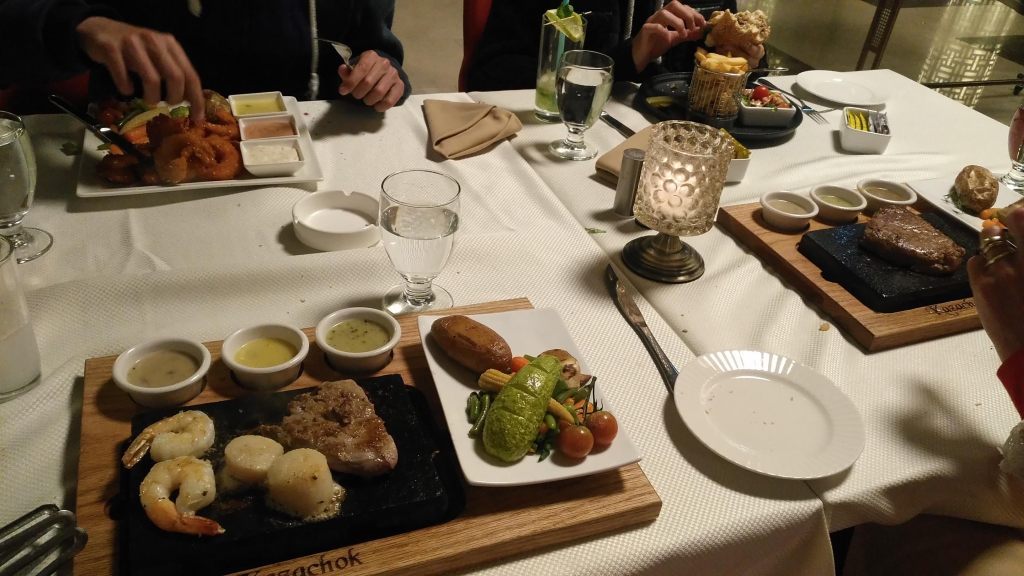
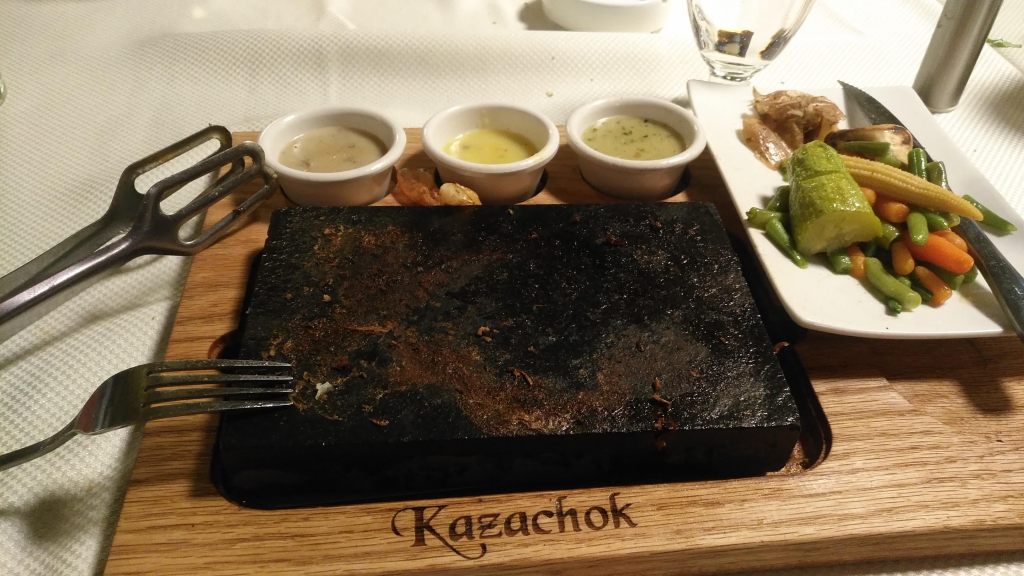
Kazachok Restaurant and terrace is 2.7 kilometer away from the church. It is a lovely restaurant with a stunning atmosphere.
Google map location of this restaurant is https://goo.gl/maps/3dAnSu1iqC1sqhMR6
Present situation of Church of the Nativity: The Catholic Midnight Mass in Bethlehem on Christmas Eve is broadcast around the world. Festivities begin hours earlier when dignitaries welcome the Patriarch of Jerusalem at the entrance to the city, near Rachel’s Tomb. Accompanied by a parade of youth organizations, he then makes his way to Manger Square, where crowds are waiting.
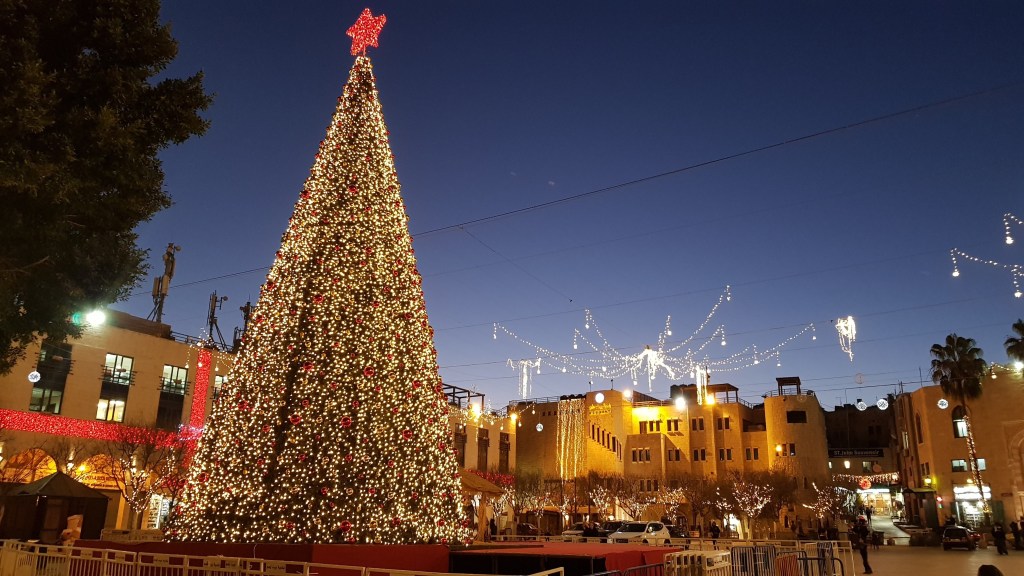
Finally, he enters the Catholic Church of Saint Catherine for Mass, after which he leads the way to the adjacent Church of the Nativity. The patriarch carries an icon of Jesus as a child and places it on the hammered star in the holy cave under the basilica that marks the Nativity site.
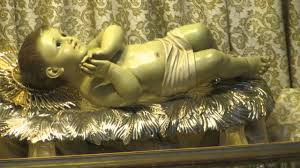
On the Orthodox Christmas Eve, 13 days later, many visitors and faithful again fill Manger Square, this time to watch processions and receptions for the religious leaders of the different Orthodox communities
The Church of the Nativity as a Cultural Heritage Criteria In 2012, UNESCO was declared a World Heritage Site by UNESCO. However, all places around the nativity, be it Christian or Muslim, are of great importance to both religions.


Leave a Reply