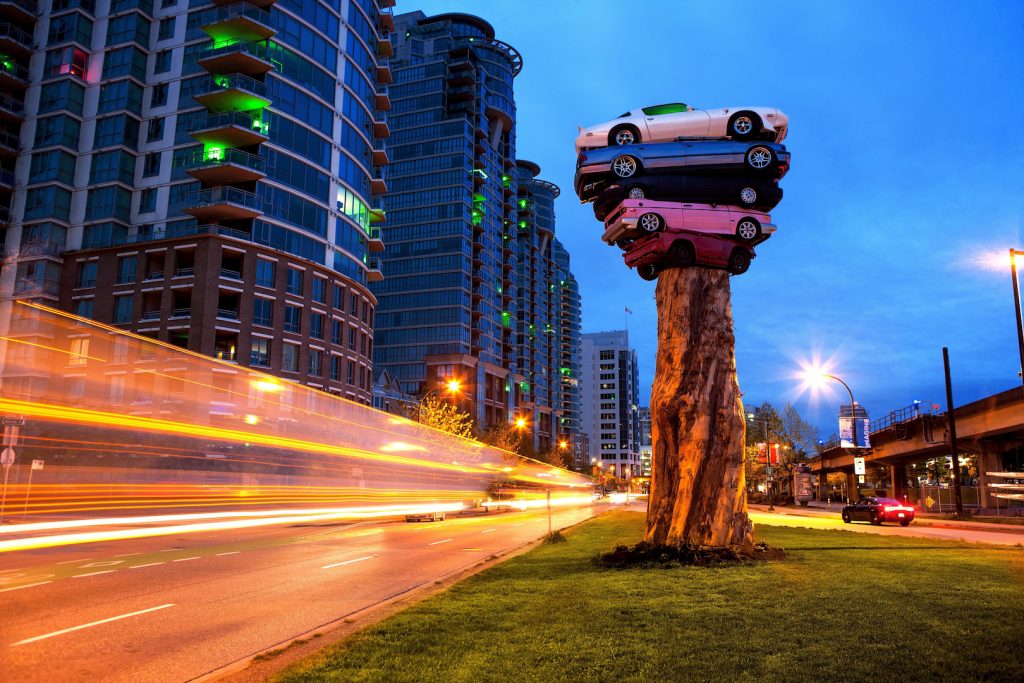
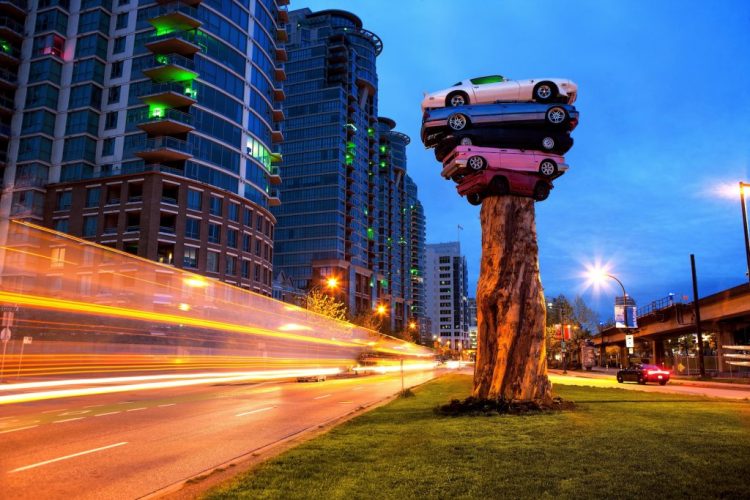
The Trans am Totem sculpture is located in downtown Vancouver, British Columbia, Canada, the largest country in the North American continent. It is an indomitable attraction of the sculptor Marcus Baucott, which was inaugurated in April 2015. Marcus created the sculpture by observing life in Vancouver for a long time. The sculpture shows how the widespread use and presence of cars has changed the city’s landscape. Part of a cedar tree is made by pressing five worn cars on a particular part. The sculpture is 33 feet long and weighs 11,340 kg.
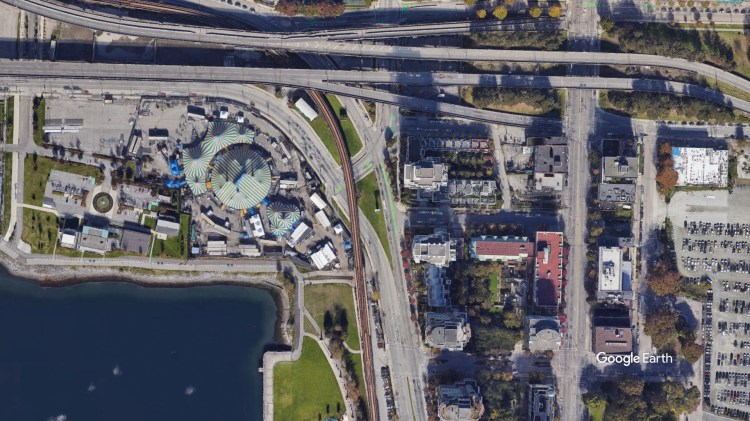
Google Map Location of Trans Am Totem: https://goo.gl/maps/fyW2hPy4yDrMUNEu5
While working on a boat on the banks of the Fraser River in the 1980s, Baukat developed a fascination with wrecked cars. At that time, farmers used to collect the wrecked vehicles in different states and use the wrecked vehicles as dams to stop the river banks from breaking. Baukot wanted to inform the public about the use of these fragile cars in his own drawing, which resulted in Baukot being quite dissatisfied. After teaching at the University of Capilano for nearly 22 years, Baucott began work on the Vancouver Biennale Trans M Totem project in 2014-2016.
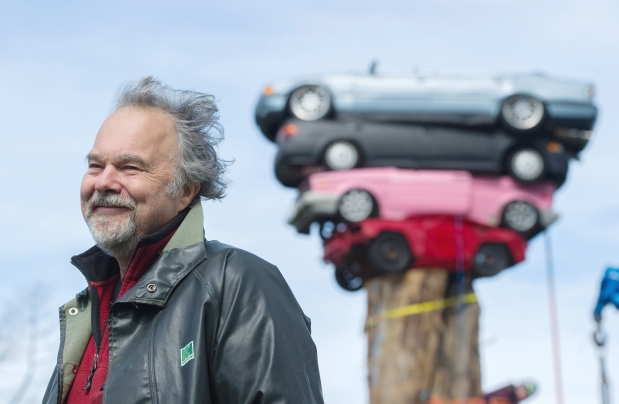
It took about two years to build the stack of automobiles with the help of Hewelt Aspinal, a partner at Boucote, and Eric Kersh, a structural engineer. The Vancouver Biennale provided CAD 10,000 for the sculpture, part of which was left to the artist for construction and installation costs. After creating the sculpture, Baucott launched a funding campaign that recovered about CAD 6,500 from the cost of creating the sculpture. Baucott said the sculpture was a “sculptural response” to the urban site and was a “celebration” of their city’s dynamism and technology, as well as a critique of “consumer culture”.
The sculpture occupies the traffic median in a busy urban intersection on Quebec Street and the Pacific Boulevard. The materials used to make the Trans am Totem refer to the history of the place. What is today known as Falls Creek was one and a half years ago it was a shoreline, a tidal flat and an ancient forest. It was close to squash, muskim and sasil-wathuth nations. The entrance to Falls Creek was the squash village Snook. Falls Creek later became the first industrial area in Vancouver to house honeycombs of beeswax and beeswax that was originally scattered by the collection of fully identical log booms in old growing Douglas Fars. Over the years the mills have gotten bigger, the logs have gotten smaller and the second growth woods have replaced the old growths. The mills were removed in the 1980s and the area was gradually transformed into existing stadiums, high-rise towers, transit corridors and pedestrian sidewalks. The Trans am Totem refers to the history of structural changes in the construction of old large forests and the current urbanization.
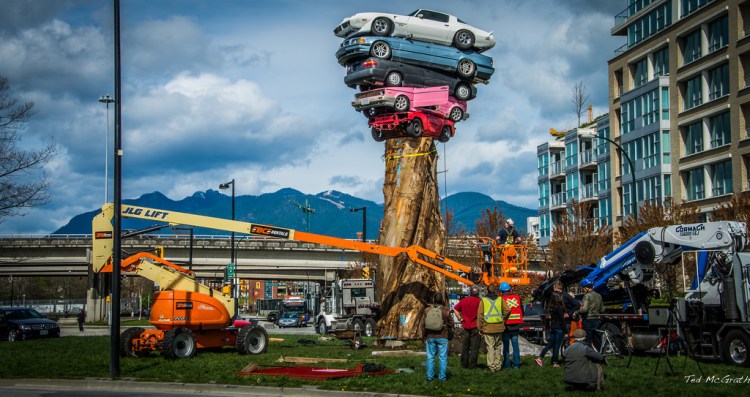
The sculpture includes five cars on top of wood made from a single tree. The top-down vehicles are a Pontiat Trans Am, a BMW Seven Series, a Honda Civic, a Volkswagen Golf MK One Cabriolet and a Mercedes-Benz. Their engines, transmissions and drivetrains were removed to reduce the weight of the vehicles provided by the local Scarapiaard. A solar powered electrical system was installed to illuminate the vehicle’s headlights and tilelights. The cars are fixed in a steel column that rises to the center of the sculpture. Bouquet repainted the vehicles. The wood on which the cars stand is taken from an old cedar tree relocated from South Vancouver Island. Half of its length was cut from the cedar tree to join the central steel column.
To know about Trans Am Totem in Bangla please click on the following Link: https://iamnrdurjoy.wordpress.com/2020/09/29/transamtotem-bangla/


Leave a Reply